


How to Know If a Grocery Sale Is Actually a Good Deal

I used to think a sale was a sale. If the sign said SALE, I assumed I was saving money. Then I started paying attention to what I was actually paying. And I realized something: A sale price isn't necessarily a good price.

During the Great Recession, I had been a wife for about two years; we'd been in our first home for about a year when I became pregnant with our first child. We were living on a very modest single income, and I had enrolled in college. Finding ways to make ends meet quickly became a top priority. Still, I often felt caught in an ocean current: the harder I pushed forward, the more life seemed to pull me back. I didn’t really know how to cook, shop for groceries, or save money when it felt as though we had nothing to spare.
Everyone seemed to be struggling, and coupons felt like gold. Thanks to that popular coupon show, I learned how to pair coupons with weekly sales flyers and recognize store sales cycles. But it also convinced me that saving money meant keeping our shelves at home packed with stuff, and if I wasn’t doing that, then I was failing.
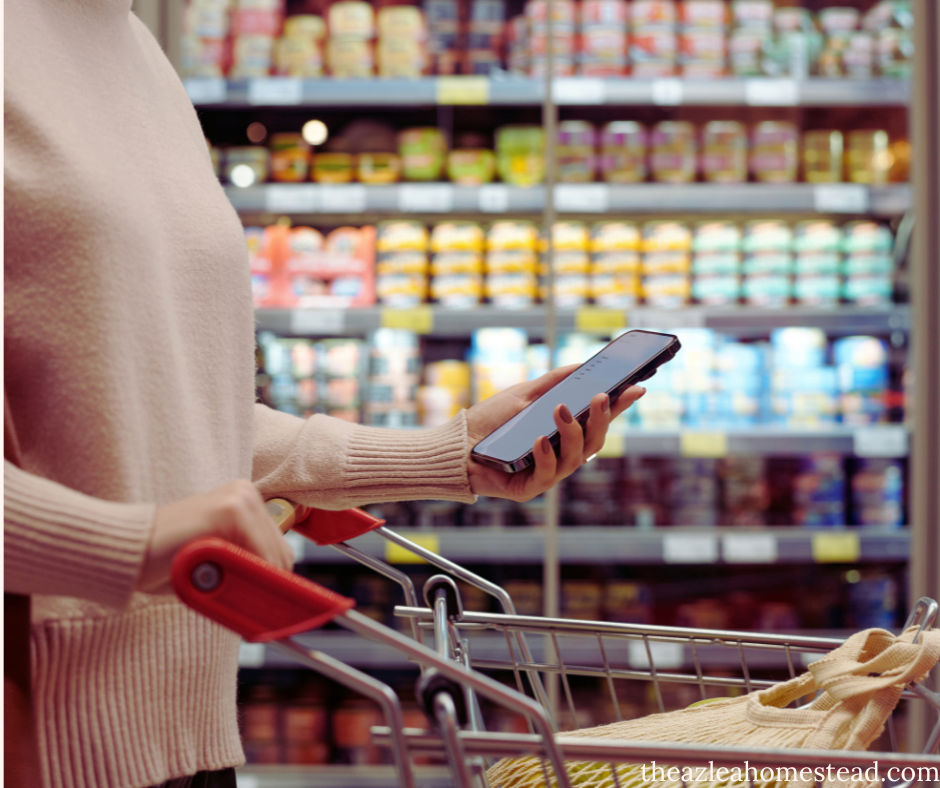
Maybe you learned to shop differently. Or perhaps you walk into the grocery store for just a few things, spot a big red SALE sign, and suddenly add something to your cart that was never on your list.
Maybe it's Buy One Get One Free.
Maybe it's “Buy 5, Save $5.”
Maybe it's 30% off.
Maybe it's a digital coupon that makes the price look irresistible.
But here's the question I want you to start asking: Is this actually a good price—or is it just a good-looking sale?
Advertisement
Why Sale Signs Can Fool Us
The word sale doesn't tell us very much.
A regular price is simply what the store normally charges for an item. A sale price is lower than that regular price, but that doesn't automatically make it the lowest price you could pay.
Then there are store loyalty apps, digital coupons, clearance prices, loss leaders, and bulk discounts. And this is where grocery shopping can get loud and confusing. A package may look like a bargain, but its unit price could be higher than another brand’s or another store’s.
Bigger isn’t always a better deal.
If you buy three jars for a slightly lower price per jar but your family uses only one every six months, you’re spending money now that could have stayed in your budget.
That isn’t saving; it’s simply shopping. A good sale can stretch your grocery budget—but only when buying extra makes sense. And to do that, you need to know what a good price actually looks like.
Start a Grocery Price Book
This is where the price book comes in. A grocery price book is simply a record of the prices you normally see for the foods you buy regularly. That's it. You don't have to track every single item in the grocery store. You use a basic notebook, a note taker on your phone, or my FREE PRINTABLE GROCERY PRICE BOOK. Using a price book not only helps in budgeting but also encourages a more organized approach to grocery shopping, making the process less stressful and more efficient.
Start with the foods your family buys over and over again. Write down the item, the regular price, the price you consider good, and the price that makes you want to stock up. Don't worry about getting it perfect. You're simply gathering information.

The first time you write down the price of a package of chicken, you may not know whether it's a good price. That's okay! Write it down anyway. The next time you see it, write down that price too. After a few shopping trips, you'll start seeing patterns. That's when your price book becomes useful.
An easy place to start is by looking at your itemized receipts from your last grocery shopping. Use this to record key details such as the store you visited, the date of purchase, brand name or house brand, size or quantity you purchased, and the price per unit, ounce, or pound. Begin by using your itemized grocery receipts as a guide. They contain most of the information you’ll need to get started.
Creating a grocery price book might require some initial effort, but the benefits are significant. By having a clear record of prices, you can easily spot trends and identify when a sale is genuinely a good deal. Over time, your price book will help you make informed purchasing decisions, leading to smarter shopping habits and savings on your grocery bill.
Advertisement
How to Find Your Stock-Up Price
I like to think about grocery prices in three categories:
Normal price: The price you're willing to pay when you need the item.
Good price: A price that's noticeably better than normal and worth considering.
Stock-up price: A price low enough that you want to buy extra because you know you'll use the food before it goes bad.
As it should be, your stock-up price will be different from someone else's. You don’t want to PANIC BUY or purchase things because someone on the internet told you to. You need to use your family size, their preferences, and your budget. If your family eats pasta several times a week, a great pasta sale may be worth stocking up on. If you rarely eat pasta, buying ten boxes because they're cheap isn't necessarily helpful.
The goal isn't to buy the most. The goal is to pay the least for what you're already going to use.
That's a very different mindset that will help to quiet the noise of social media, sales ads, and commercials.

Track Foods You Buy Regularly
You don't need to track 100 grocery items. Start with about 10-20 foods your family buys frequently. Here are some ideas:
Your list may look completely different. That's actually the point. Your grocery price book should reflect your household, not somebody else's. If you make biscuits every week, flour belongs on your list. If your family doesn't eat rice, don't track rice just because it’s on my list. If your children eat peanut butter like it's a food group of its own, you probably want to know exactly what a good peanut butter price looks like! Pay attention to what you actually use. That's where the savings are.
Watch Seasonal Sales
Once you've started tracking prices, you'll also begin noticing that certain foods tend to have better prices at certain times of the year. Baking ingredients often go on sale around Thanksgiving, Christmas, and Easter.
Check out your local farms for produce when it is in season. Most even offer their own meat products, which can be a higher upfront cost but will be significantly cheaper and higher quality than grocery retailers.
If you do purchase your meat from the grocery store, keep in mind that it will typically be discounted the most around major holidays. I can tell you exactly when I purchase the amount of ham we use within a year. I buy it from a grocery chain the week after Thanksgiving when it is $0.97 per pound. I purchase two whole hams, and then divide them up into portions we would typically use for one meal. I only shop at this store for this particular deal. I can find better deals on everything else at other retailers in my area.
And after major holidays, you may find clearance prices on items that stores need to move. This is where your price book becomes even more valuable. Instead of thinking, “Oh, that's on sale!” you can think, “That's actually a good price compared with what I've been paying.”
Buy Extra - But Define “Extra”
When you find your stock-up price, you don't have to clear the shelf. You don't need a garage full of groceries. You don't have to spend your entire grocery budget because something is 50 cents cheaper than usual. Sometimes “stocking up” means buying two. ONE FOR NOW, ONE FOR LATER. That's it. The important part is having a plan before you shop. Otherwise, a sale can turn into an excuse to spend.
Don't Forget to Consider Where You Shop
Your price book can also help you learn which stores tend to have better prices on the foods you buy most often. You may discover that one store consistently has the best price on meat while another has better prices on pantry staples. You don't necessarily need to visit five stores every week. That can defeat the purpose if you're spending extra time, fuel, and energy chasing a few cents. But knowing your local prices gives you options. And sometimes the best deal is simply buying what's on sale at the store you're already visiting.
Before you buy something simply because it's marked down, ask:
Do we use this?
Do we already have it?
Is this actually a good price?
Will I use it before I need to buy it again?
Those four questions can save you from a lot of unnecessary spending. You can look at a sale and decide, Yes, that's a good price. I'll buy an extra one. Or you can look at it and say, That's not actually a deal for us.
Both are wins.
A sale isn't automatically a good deal.
A good deal is a price that makes sense for your budget, your family, your pantry, and the food you're actually going to use.
So, the next time you see that big red SALE sign, don't automatically reach for your wallet. Take a second. Check your price book. And ask yourself: “Is this actually a good deal?” That little question might change the way you grocery shop.
Hey there, friend, if you learned something from this article, you may enjoy these:
Don’t forget to download your FREE GROCERY PRICE BOOK!
Did you know that we have a newsletter? It features some of our favorite recipes and free printables that are available only to our subscribers! And don’t worry, we hate spam mail and value your time. You’ll receive a copy of our latest email as a thank-you and then the newsletter, delivered every month. You can help our small family business by sharing us on Facebook, Instagram, and Pinterest. Click here to sign up for our newsletter today!
Advertisement


